

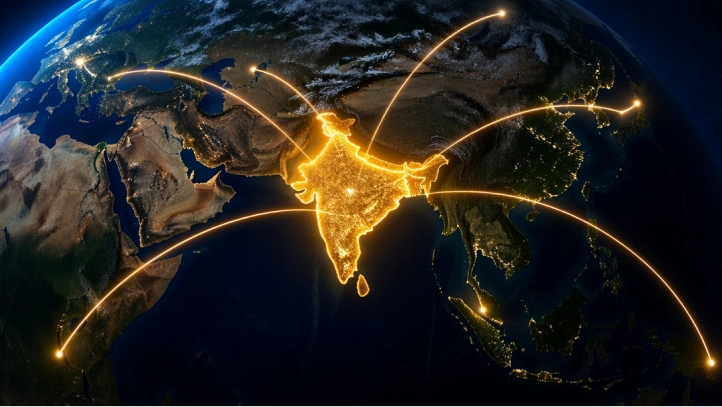
In contemporary international relations, the discourse on power has expanded beyond coercive and material capabilities to include ideational and cultural influence. The concept of soft power, articulated by Joseph Nye, underscores the ability of states to shape preferences through attraction rather than coercion. In present-day context, the diffused world powers, declining Western legitimacy and inflated public influence in state decisions, power of the state depends mainly on its ability to frame perceptions, shape global debates and communicate and spread them throughout the world. Soft power plays a pivotal role in today’s complex global landscape, offering nations a means to wield influence, build relationships, and shape international narratives beyond traditional hard power tactics. Consequentially, the notion of narrative sovereignty has emerged as a critical extension of soft power.
In practice, sovereignty is fluid. Narrative sovereignty refers to a state’s capacity to define, control, and project its own story and perceptions internationally. India’s repositioning within this evolving paradigm is significant. India’s endurance, resistance, and survival despite centuries of continuous invasions and British rule, the civilizational framing is a strategic necessity for self identity as well as global portrayal. Moving beyond a passive repository of cultural capital, India is actively seeking to reclaim interpretive authority over its civilizational identity and global image. The adage “who controls the story controls the stakes” has never been more pertinent. India’s civilizational narrative is increasingly emerging as a cornerstone of its soft power and is actively shaping its global outreach.
Soft Power to Narrative Sovereignty: India’s Diffusion sans Control
Traditional soft power frameworks emphasize culture, political values, and foreign policy legitimacy as key sources of influence. Joseph Nye conceptualizes Soft power as the ability to affect others to obtain the outcomes one wants through attraction rather than coercion or payment. However, this framework assumes a relatively neutral global information environment. Analyses of soft power overwhelmingly focus on soft power ‘assets’ or capabilities and how to wield them, not how influence does or does not take place.
In contrast, the contemporary global order is marked by narrative contestation, where competing powers actively shape international perceptions through media, academia, and digital platforms. In such a context, soft power is insufficient without control over the means of narration. Narrative sovereignty thus becomes essential—it is not merely about being attractive, but about defining the terms of one’s attractiveness. The battle for narrative dominance has profound geopolitical consequences as controlling the story allows actors to mould public opinion, sway policy, legitimize or delegitimize entities, and mobilize populations.
Soft Power allows the Nations to rewrite their positioning and framings in the global order thereby asserting their own standing. For developing countries like India, soft power is an opportunity to expand their influence and strengthen their domestic credibility. From a civilizational perspective, this aligns with Indic epistemology, where itihasa (history) and katha (narrative) are not passive recountings but instruments of moral and political orientation.
Historically, India’s soft power has been deeply civilizational, arising from the organic diffusion of ideas, practices, and cultural forms. Now India is effectively utilizing the soft power tools to project its narrative sovereignty, mobilizing public opinion, facilitating investments, and advocating for national interests. Soft power narratives are often more palatable to international audiences and can effectively build soft power which can be leveraged for more direct geopolitical or economic interests of their state sponsors.
Asserting Narrative Sovereignty and the Civilizational Lens
India’s contemporary repositioning reflects a conscious effort to reclaim narrative agency. Clearly the cultural diplomacy is not new to India, in fact the better term for it would be a civilizational dialogue where faith in the commonality of human sentiments overpowers political and economic divergences. India with its more than five millennia of civilization is fortunate to have both developed culture of strategizing its civilizational behaviour as well as developing the use of culture to overcome the effects of differentiation within the societies and amongst societies.
India increasingly frames its foreign policy through civilizational idioms such as “Vasudhaiva Kutumbakam” (the world is one family), prominently articulated during global forums like the G20 presidency. When the world is treated as a family, Indic philosophical traditions take the stage in global discourses. Furthermore, narrativising India’s trade participation in ancient times positions India as a participant in global civilisational growth and as a centre of ancient culture and knowledge. Nextly, India has moved toward institutional mechanisms to consolidate soft power. Institutions such as the Indian Council for Cultural Relations (ICCR) with its centres like Swami Vivekananda Cultural Centre, Lal Bahadur Shastri Centre for Indian Culture, Netaji Subhash Chandra Bose Indian Cultural Centre etc have proactively furthered the Indian cultural diplomacy. Initiatives like the WHO Global Traditional Medicine Centre (GTMC) put forth traditional knowledge with evidence and innovation upon on the institutional stage more formally and in spirit of global good.
Challenges
Despite several advances, India’s pursuit of narrative sovereignty faces several structural and strategic challenges. Western media and academic institutions continue to dominate global discourse, often framing narratives in ways that may not align with India’s self-perception. Countries like South Korea and China have developed highly coordinated cultural and digital strategies, intensifying competition in the soft power domain. India can learn from the very successful case study of Confucius Institutes and adapt to project its own soft power across the globe. Moreover, balancing global appeal with civilizational authenticity remains a persistent tension, particularly in sectors like wellness and spirituality. Also, with the real time contestations and corrections of Narrative Sovereignty in digital sphere, virtual strategic communication emerges as a key battleground.
Conclusion
India’s emphasis on narrative sovereignty via the global soft power discourse has broader implications for global order wherein the universality of Western normatic frameworks are challenged and soft power is redefined as an effective means to assert agency and not merely a cultural export. From a civilizational standpoint, India’s repositioning is not merely strategic but restorative. Narrative sovereignty today is an assertion that India is not merely a subject of study but a producer of frameworks and meanings. Overall, this signals a shift towards a dynamics where identity, narrative, and perception play central roles in shaping global politics. In reclaiming its voice as a Civilizational State, India is not merely enhancing its soft power-it is redefining the very grammar of influence in international relations.